Made For The Room
An individual piece should answer a practical need while belonging naturally within its setting.
Tables
Refectory and Dining Tables
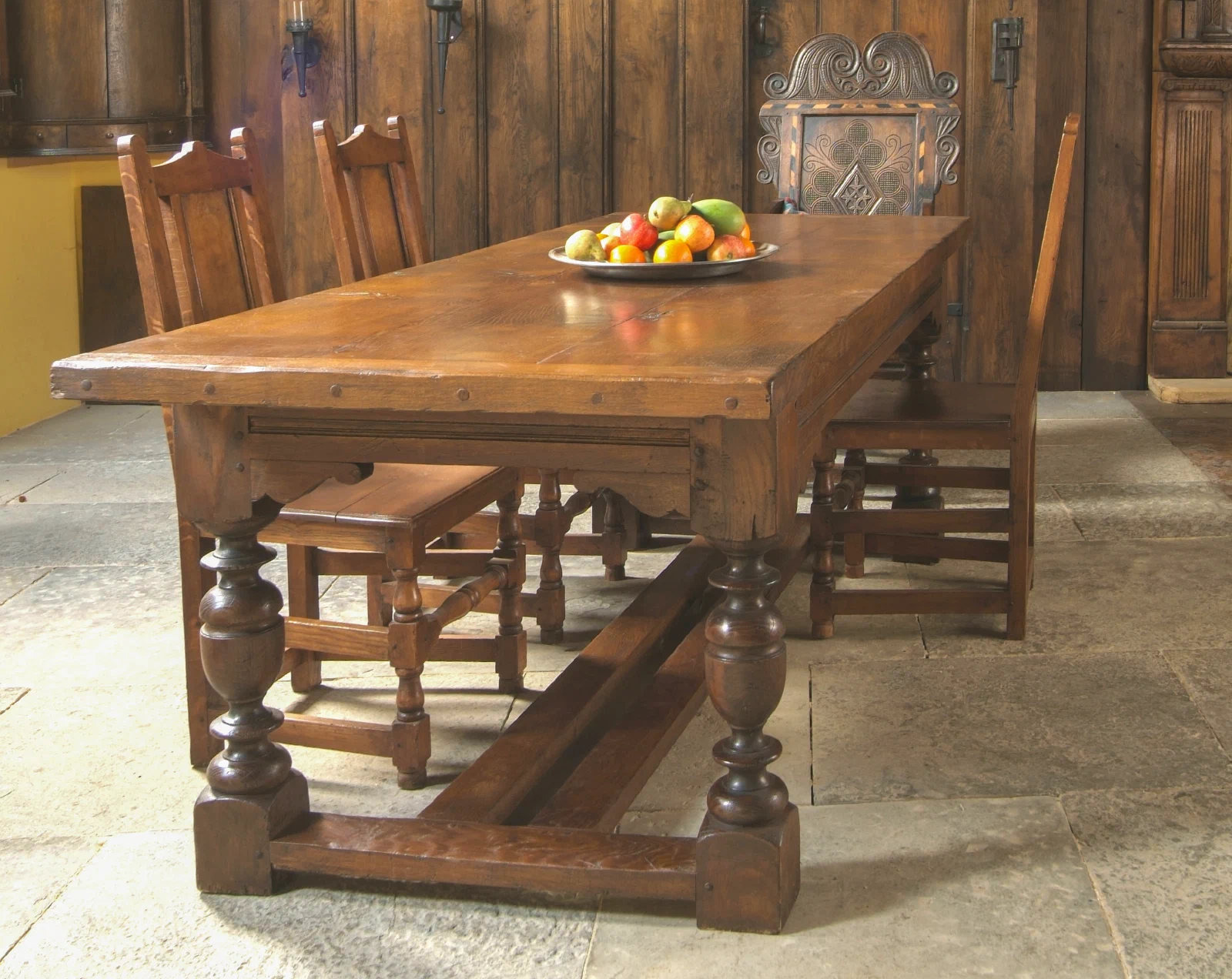
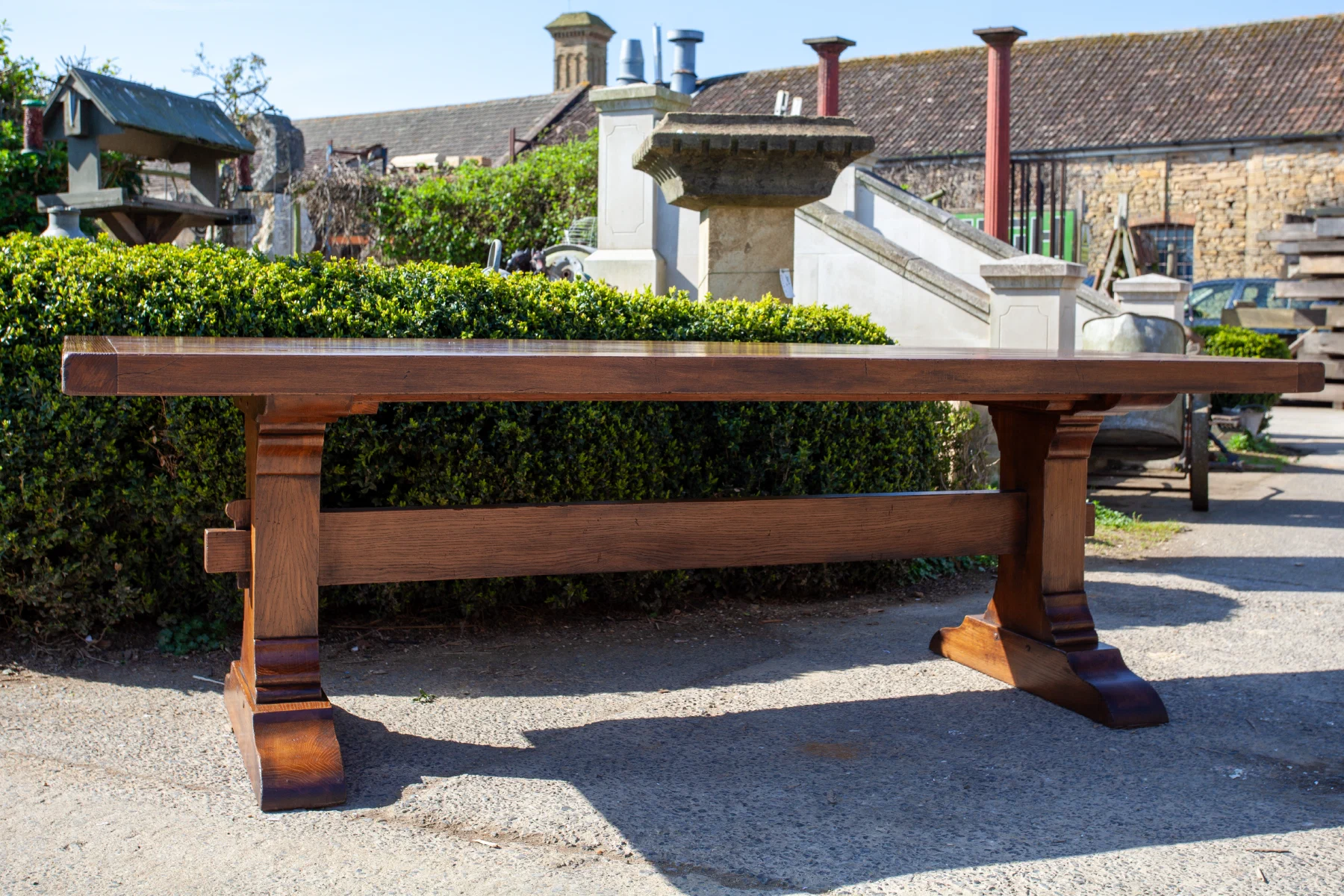
A dining table has to seat people comfortably before anything else, so its length, width and the position of the legs and stretchers are set around the number of chairs it needs to take. Refectory tables with stretcher bases suit long rooms and halls, and their tops can be left plain or given a simple channel moulding.
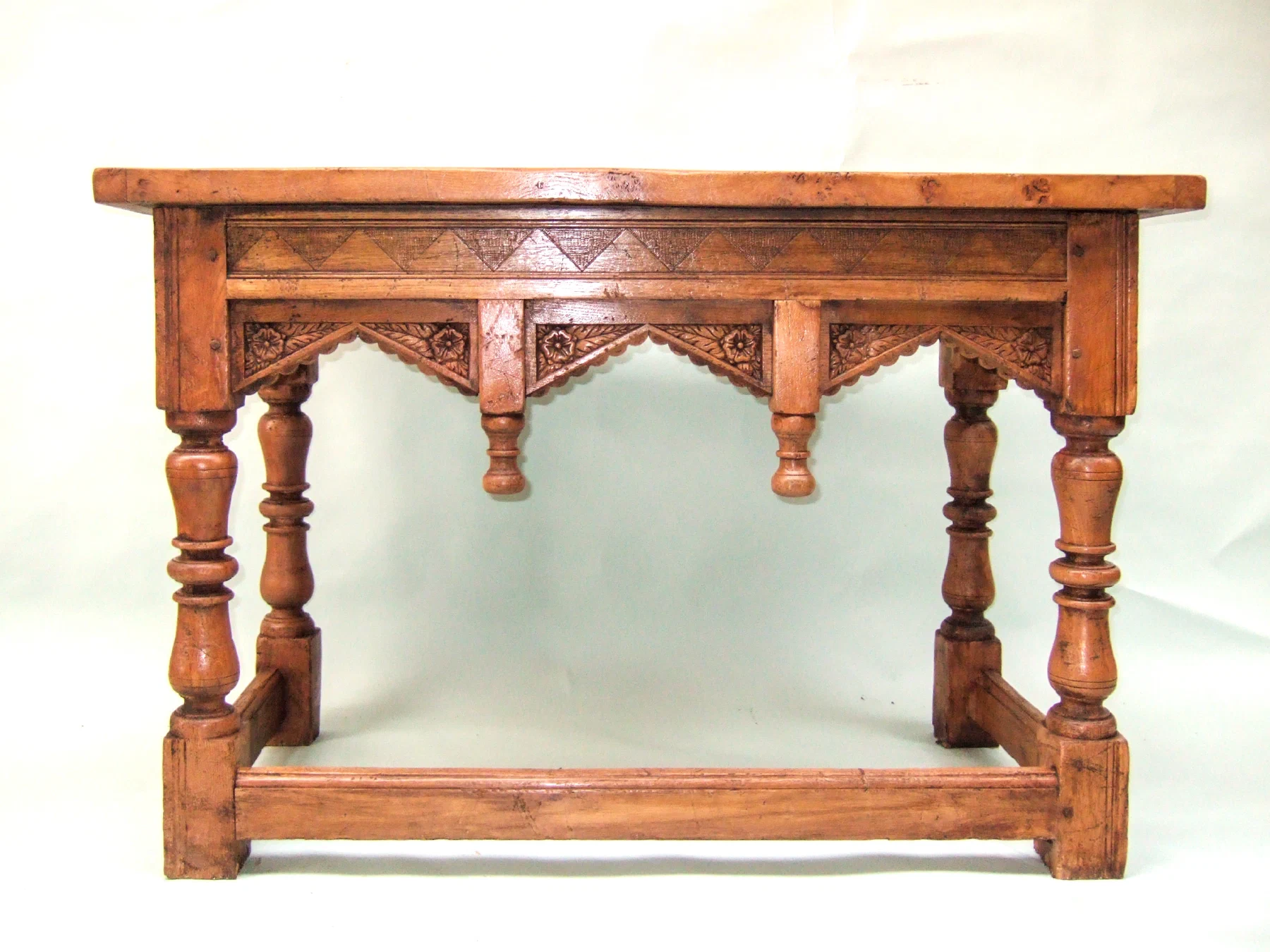
Smaller side and occasional tables follow the same approach, with turned legs and carved friezes used where the room calls for more detail.
Bedroom
Beds and Bedroom Furniture
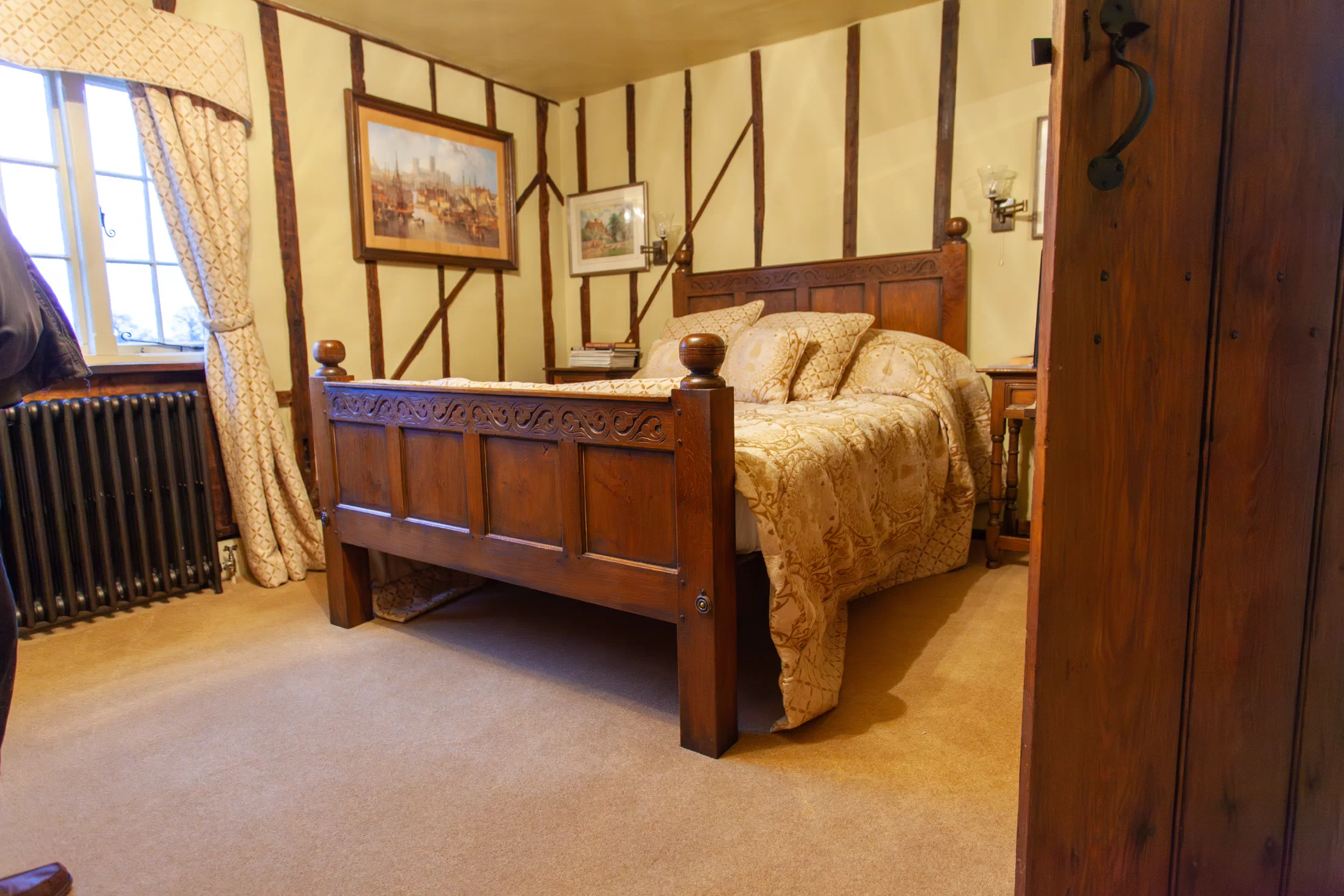
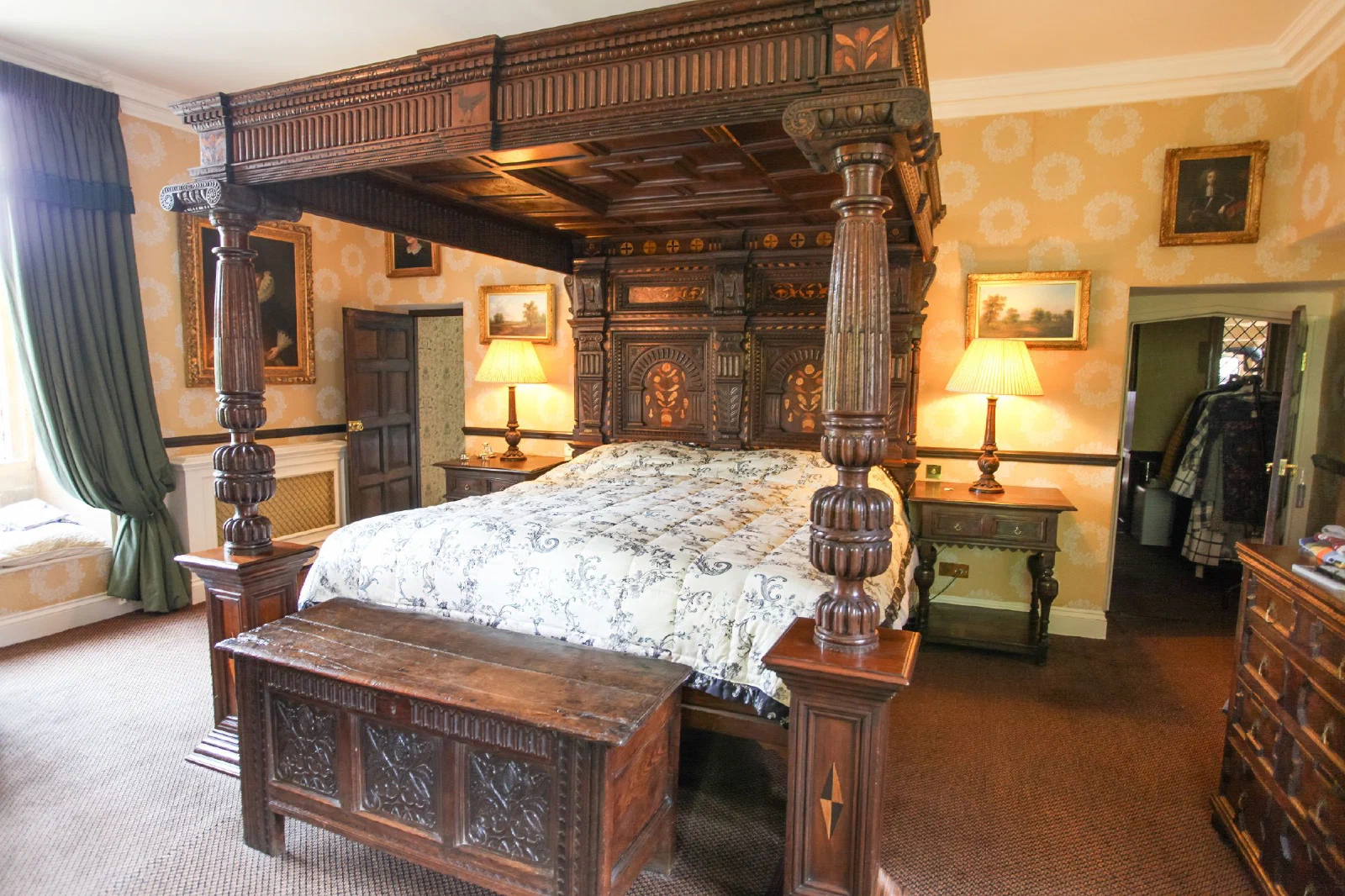
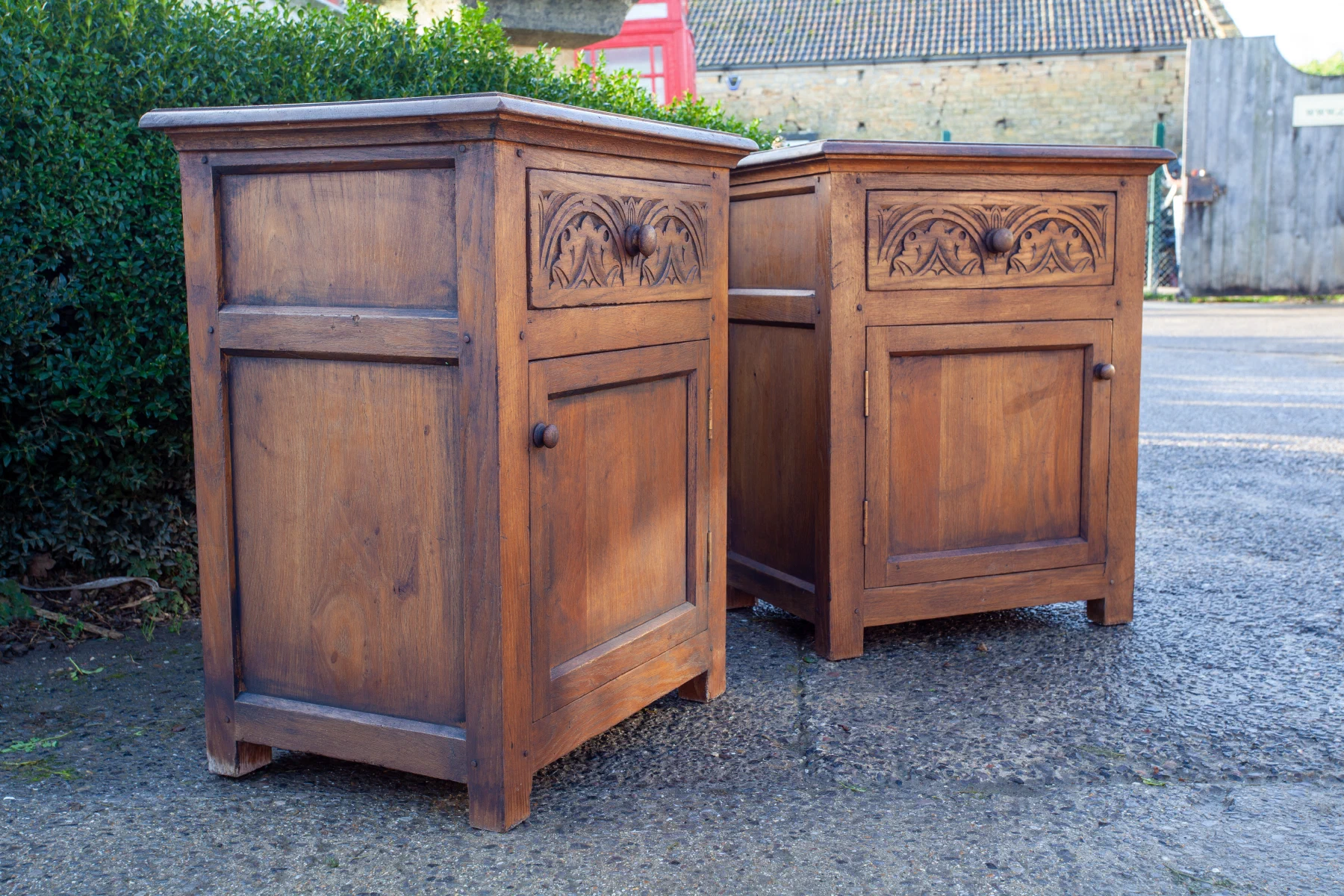
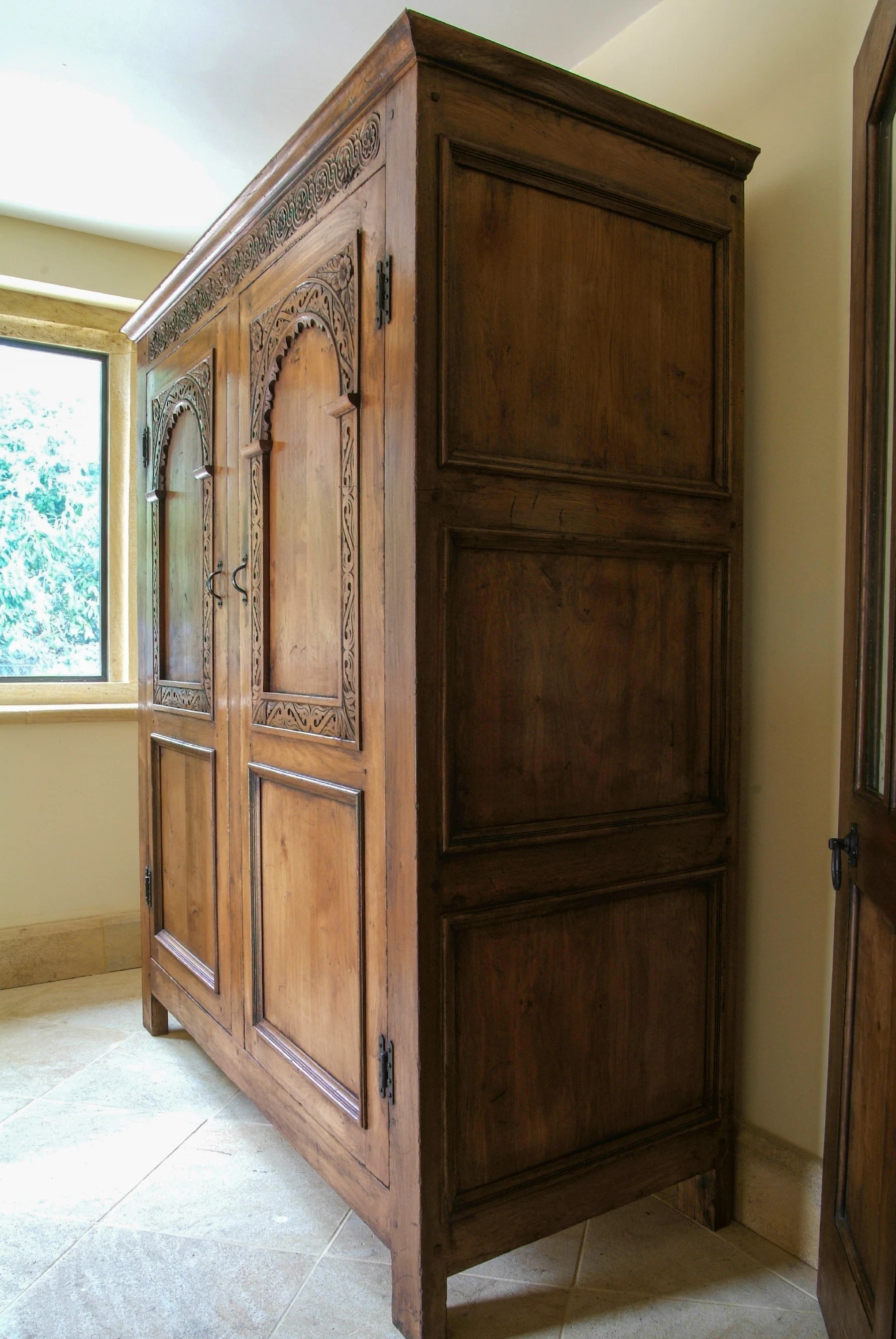
A bed needs to sit convincingly within the room, whether it has a half-height panelled headboard or a fully carved one. Bedside cabinets, chests and wardrobes can be made alongside it, sharing the same mouldings, timber and finish.
Our oak replica of the Corbet bed, a late-Elizabethan bed of 1593 in the collection of the Victoria and Albert Museum, has a carved tester and arcaded headboard panels inlaid with bog oak, sycamore and holly.
At Woodside House, we made a carved mahogany bed, bedside cabinets and a breakfront wardrobe for a Georgian bedroom, developed from references the client supplied.
Cupboards And Chests
Court Cupboards, Chests and Dressers
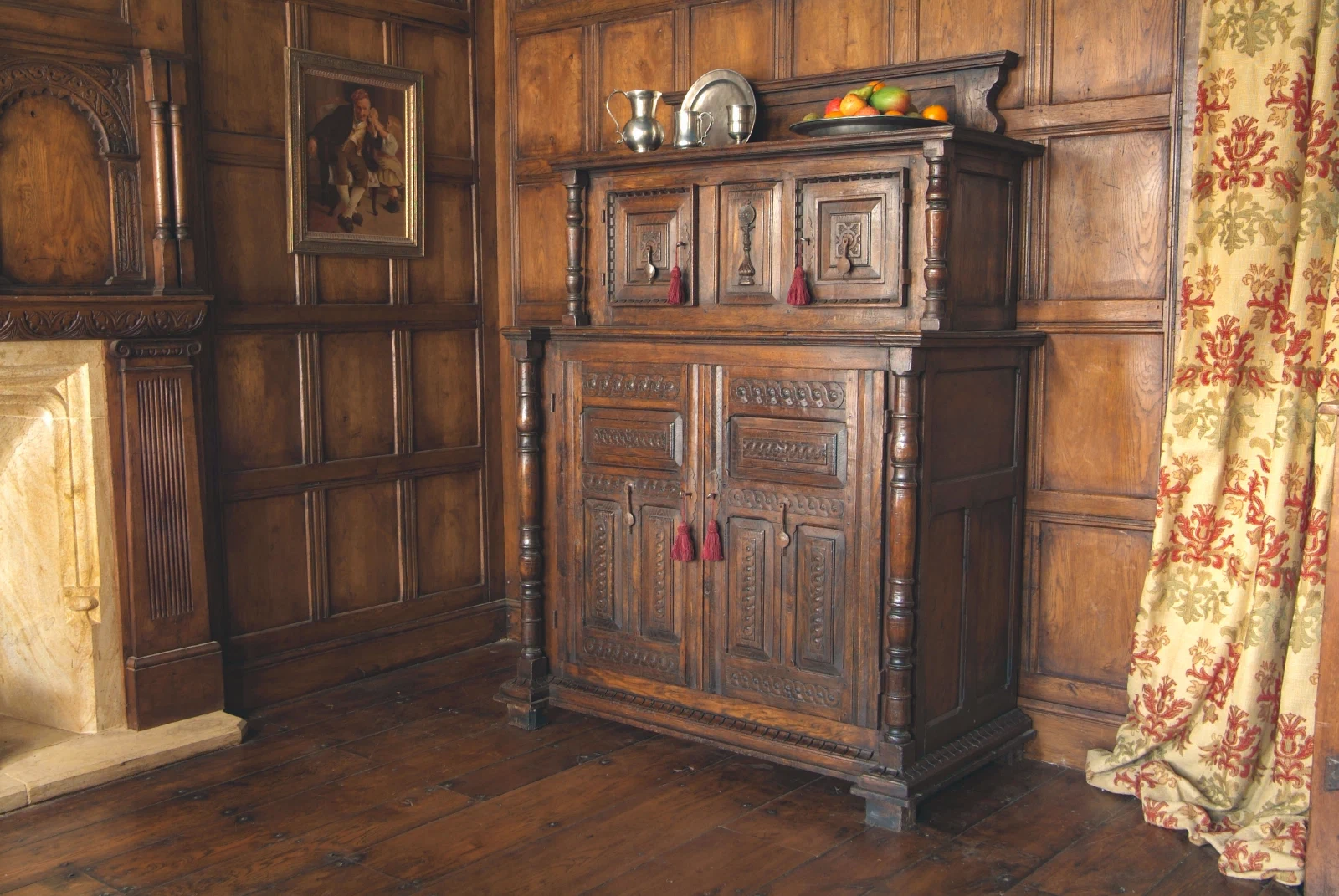
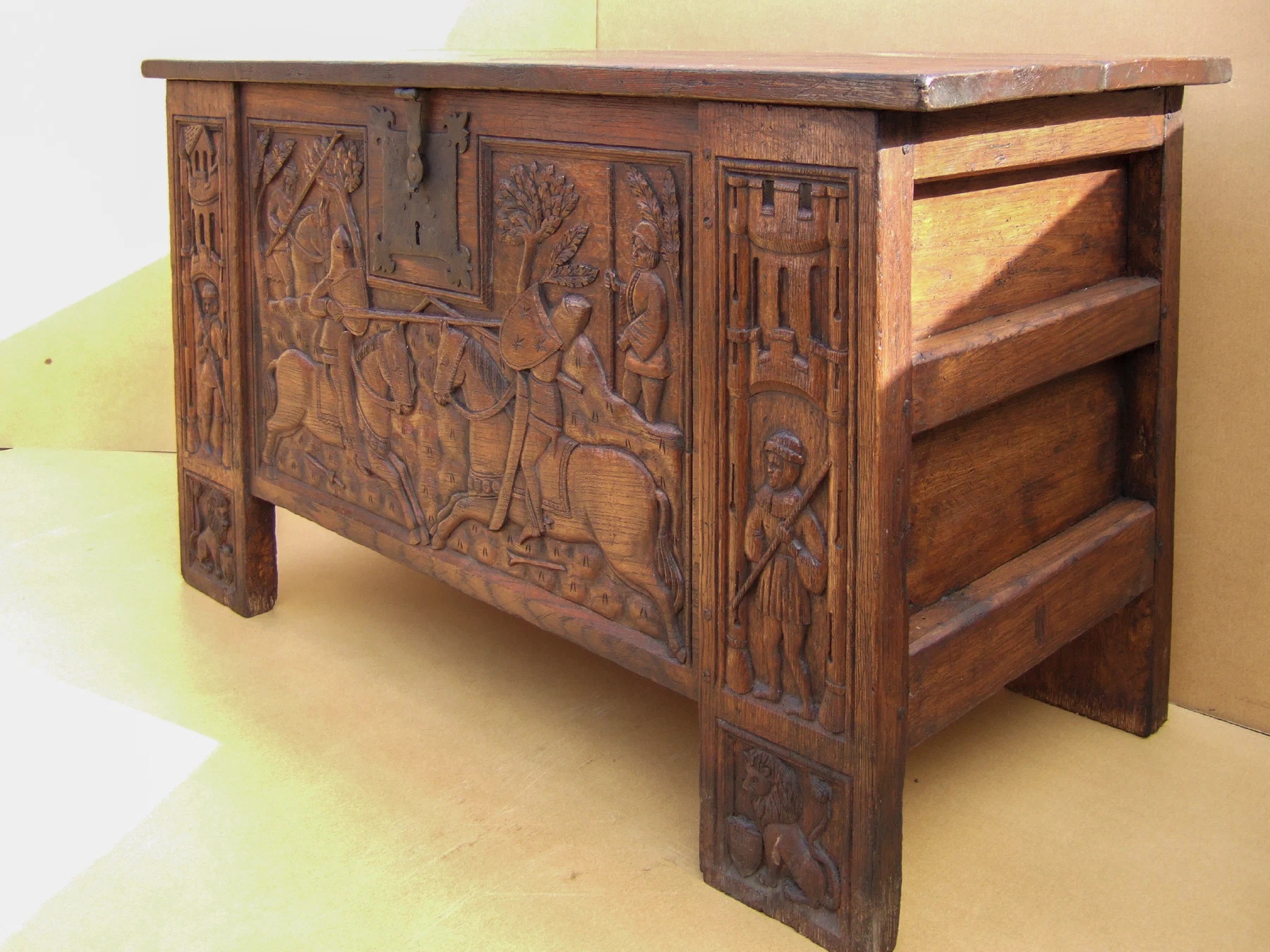
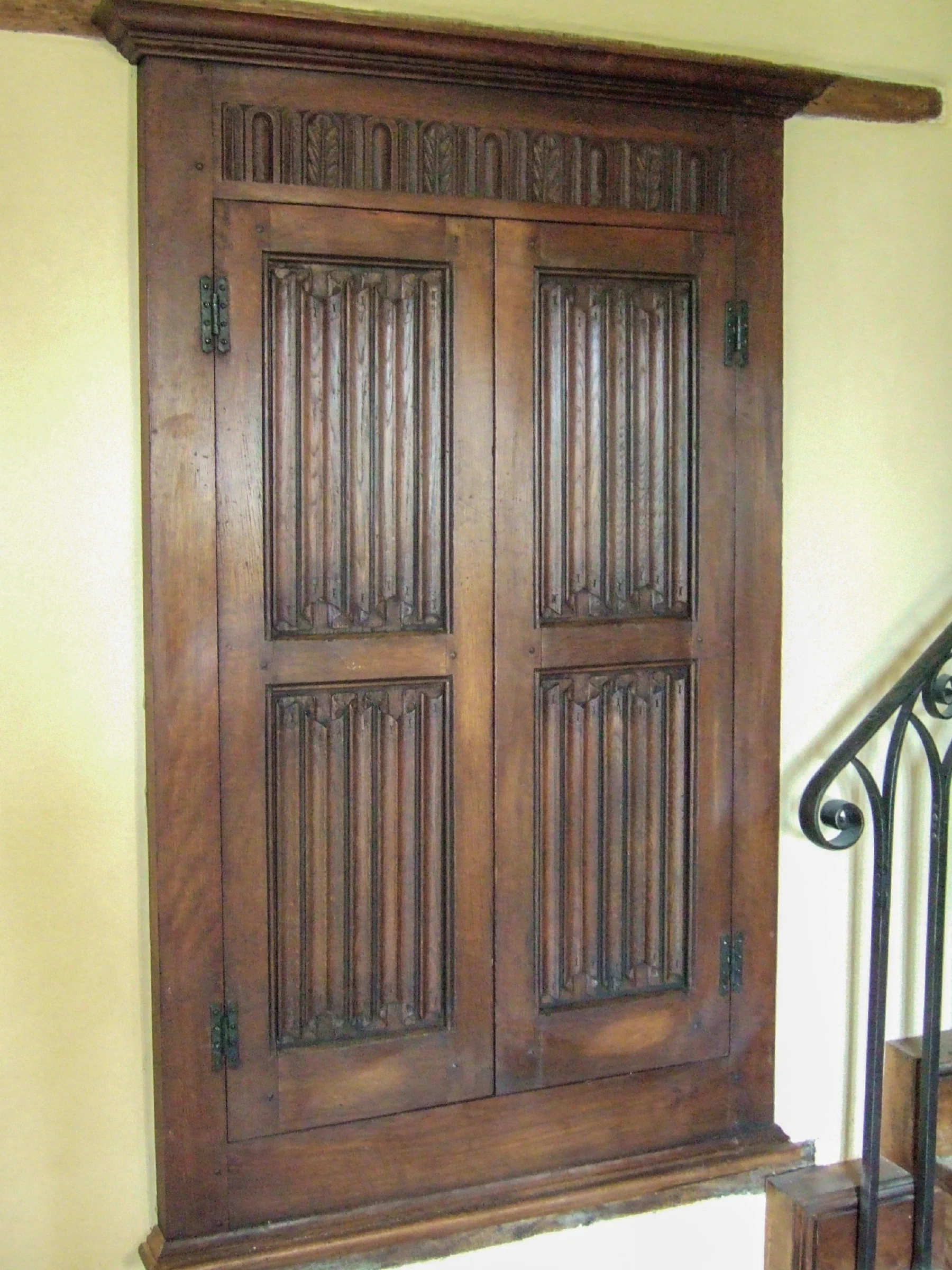
Court cupboards, chests and dressers often carry the most carved detail in a room: panelled doors, turned columns, carved friezes and linenfold panels. The carving is done by hand in our workshop and planned with the proportions of the piece, so that the decoration supports the form rather than covering it.
Plainer pieces, such as dressers and corner cupboards, rely instead on well-judged mouldings and the figure of the timber.
How Each Piece Is Made
Purpose, Proportion And Construction
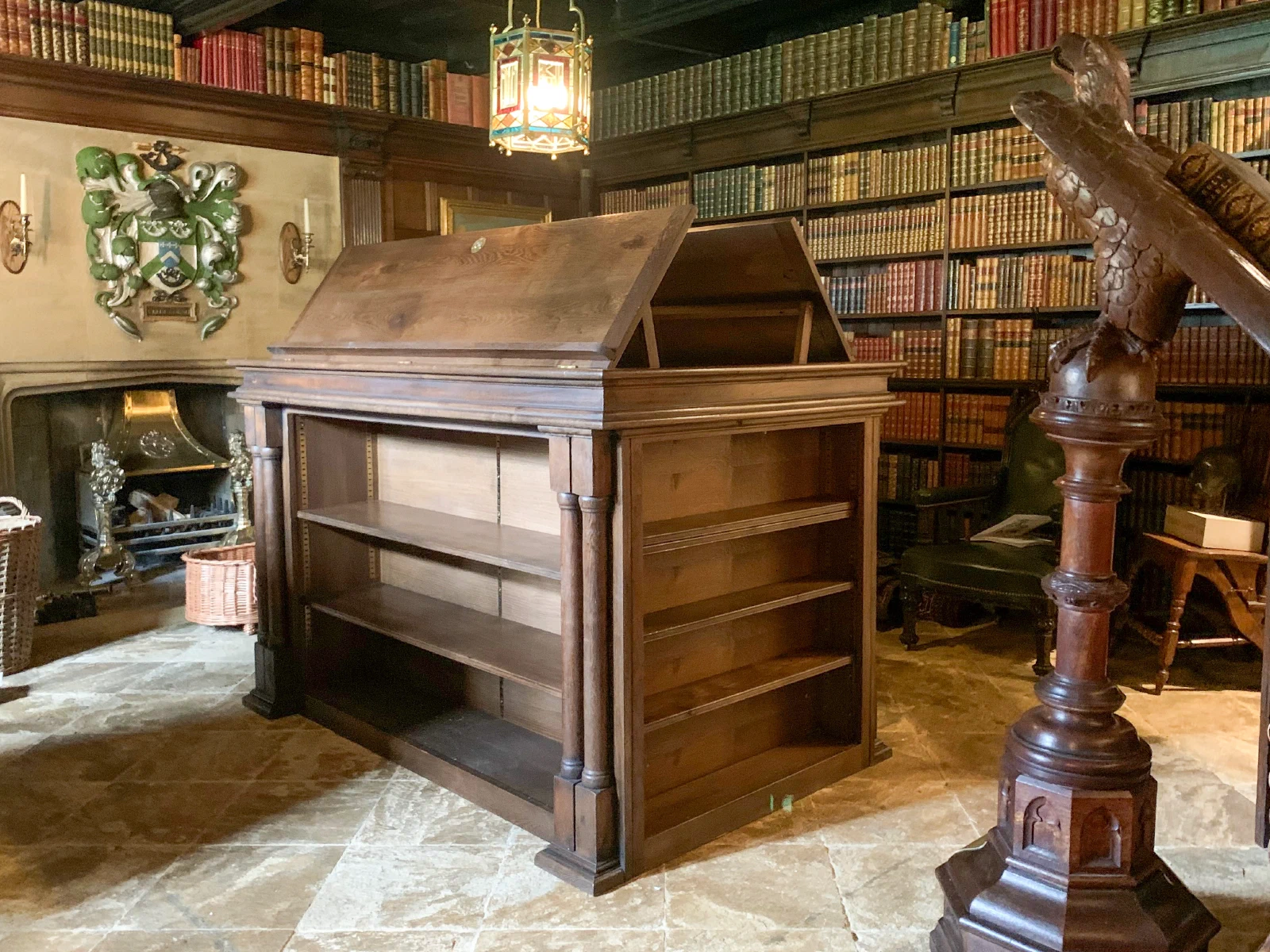
Whether the commission is a lectern, a chair or a full set of bedroom furniture, three connected decisions shape it.
Purpose
The intended use establishes dimensions, access, storage and the practical requirements that the piece must answer.
Proportion & Detail
Scale and decorative treatment are judged in relation to the room and any historic or architectural references supplied with the brief.
Oak, Joints & Finish
Oak is our standard timber. Each piece is built with traditional joints such as mortice and tenon, then finished in our workshop using the same staining, patination and hand-polishing methods as our joinery.
Project Photography
More Period Furniture
Commissioning A Piece
The most useful starting point is a clear account of the room, the purpose of the piece and the references that matter to you.