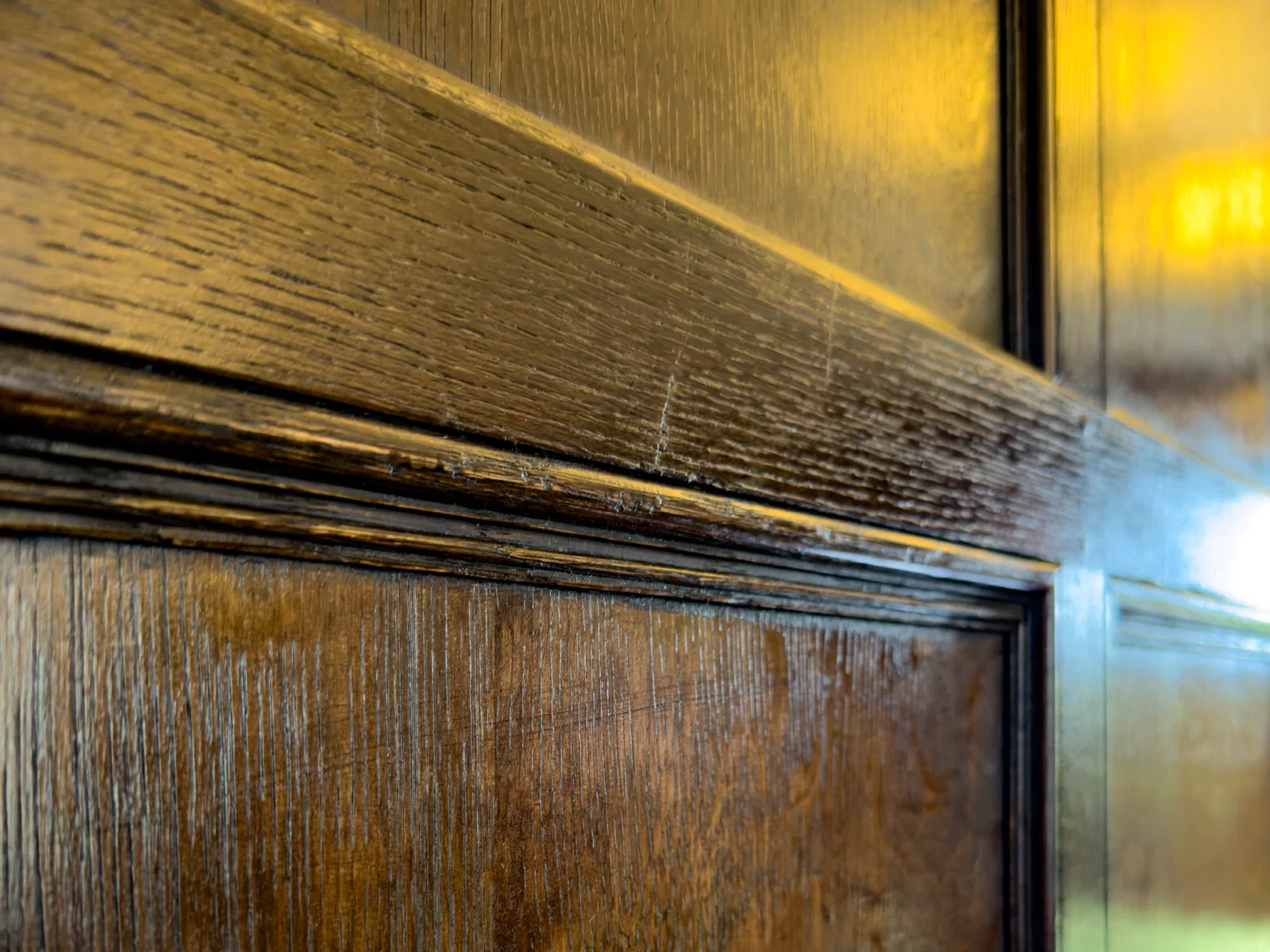
Finish is sometimes discussed as though it begins when manufacture ends. In practice, it influences decisions much earlier: the choice of timber, the moulding detail, the relationship with existing joinery and the atmosphere the finished work will bring to the room.
Treating it as part of the design from the outset makes those decisions more coherent and gives the workshop a clear understanding of the intended result.
Finish changes how joinery is read
Construction gives a piece its form. Finish affects how clearly that form is seen.
Colour can make a run of panelling feel quiet or give it greater visual weight. Sheen changes the way light moves across rails, stiles and mouldings. A deeper surface character can bring out the grain and variation of timber; a restrained painted finish can allow the geometry of the joinery to sit calmly beside plasterwork and other architectural elements.
These effects are not separate from the design. A moulding profile that appears subtle in bare timber may read more strongly once colour and finish create shadow around it. The size and spacing of panels can also feel different when the surface becomes lighter, darker or more reflective.
Begin with the setting
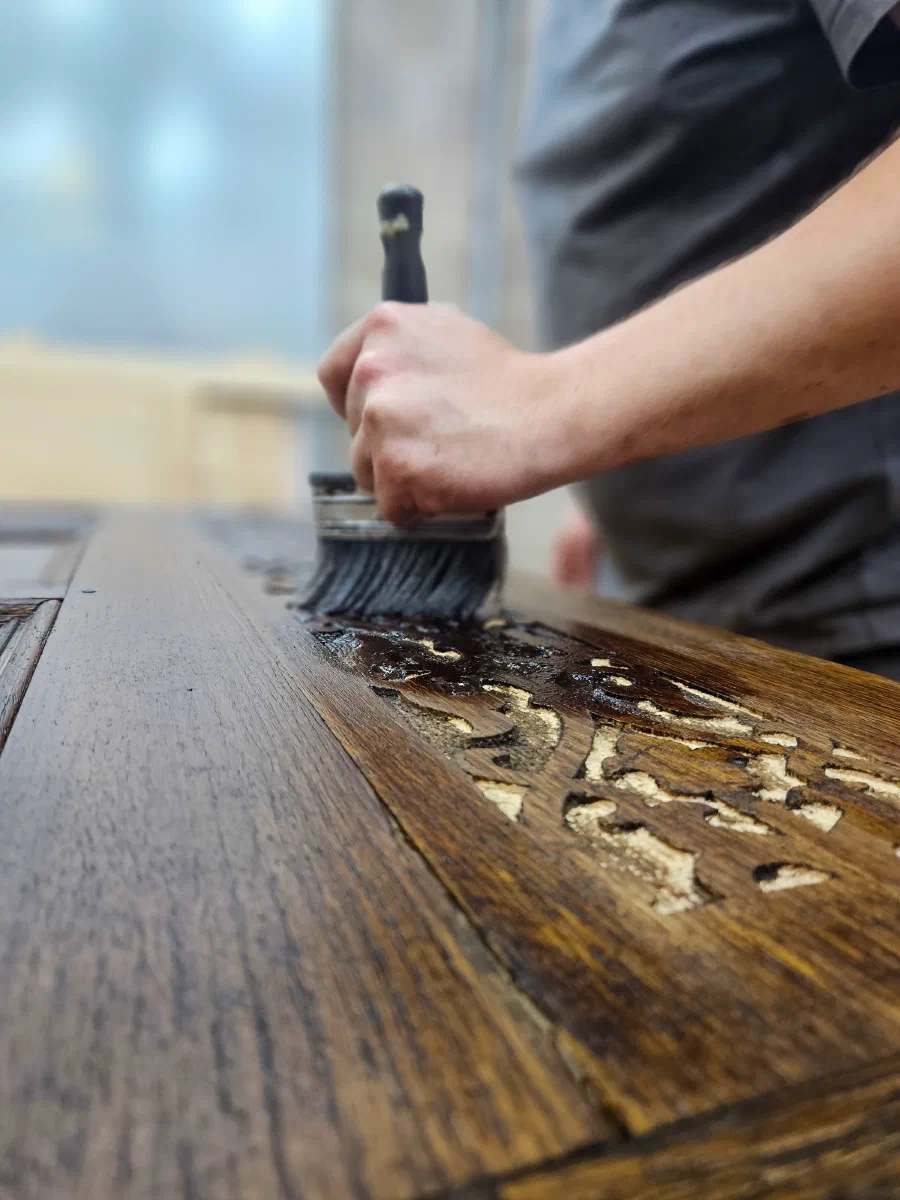
The room provides the most useful reference. Existing floors, doors, beams, panelling and furniture all have colour and surface character of their own. Natural light changes across the day and can make the same sample appear quite different from one elevation to another.
In a period property, new joinery may need to sit beside materials that have acquired variation through long use. The answer is not necessarily to make the new work look artificially old. It is to understand the depth, warmth and degree of contrast needed for the two to feel comfortable together.
In a traditionally designed new interior, the same care matters for a different reason. The finish needs enough character to support the architectural detail without making the work appear forced or over-treated.
Timber and painted joinery ask different questions
With clear-finished or stained timber, the grain remains part of the composition. Timber selection, colour development and the degree of surface depth all need to work together. The finish should support the material rather than obscure the qualities for which it was chosen.
Painted joinery shifts attention towards proportion, moulding and shadow. Colour remains important, but so do the method of application and the intended surface character. A clean sprayed finish and a hand-brushed surface give different impressions, and the appropriate choice depends on the room and the detail of the work.
Neither approach is inherently more traditional or more suitable. What matters is that material, form and finish answer the same brief.
Agree the intended character in useful language
Words such as “dark”, “aged” or “natural” can mean very different things to different people. A more useful conversation describes what the finish should do in the room.
Should the joinery sit quietly beside existing oak, or provide deliberate contrast? Should the grain remain prominent? Is the room intended to feel light and architectural, or warmer and more enclosed? Are there existing colours or materials that the new work needs to connect?
Reference images can help, particularly when they show the finish in a comparable interior rather than as a small isolated sample. Existing joinery within the property is more valuable still. It gives the workshop a direct point of comparison for colour, sheen and surface variation.
Use samples to test the direction
A sample is a decision-making tool, not a miniature promise of how every board will look. Timber varies, and its appearance is affected by scale, orientation and light.
The most useful sample is large enough to show grain and colour across a meaningful area. Where mouldings are important, a shaped section can reveal how the finish settles into detail and how strongly the profile will read. Painted samples should be viewed against the surrounding wall colours and in the room’s own light where possible.
Samples allow the direction to be refined before the full piece is finished. They also make it easier to discuss whether more depth, less contrast or a different degree of sheen would better suit the setting.
Plan adjoining materials together
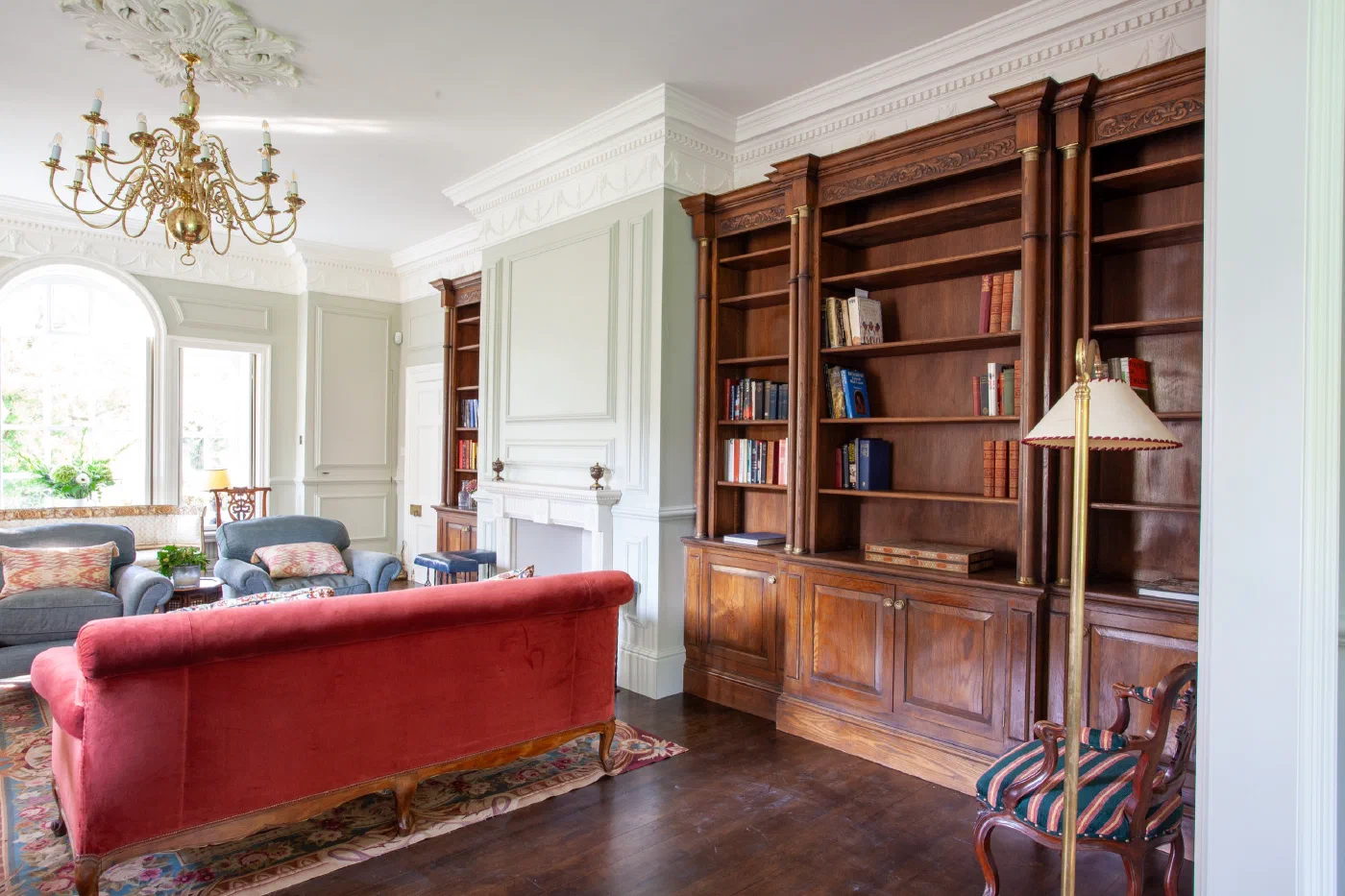
Joinery rarely ends at a neutral boundary. Panelling meets a floor and cornice. A bookcase may stand beside a stone fireplace. An external door sits within masonry and relates to windows, thresholds and ironmongery.
The finish should therefore be coordinated with more than the timber itself. Metalwork, paint colours, stone, textiles and surrounding joinery all affect the final balance. Considering them together helps prevent one element from becoming unexpectedly dominant.
This is particularly important where several pieces are being made for connected rooms. They may need continuity without being identical. A shared undertone, related sheen or consistent approach to surface character can connect the work while allowing each space to retain its own emphasis.
Keep future care in the conversation
Different finishing systems have different care requirements. The correct maintenance advice depends on the material, the chosen finish and the conditions in which the joinery is used.
That makes aftercare part of the specification rather than an assumption. The workshop should be able to explain how to clean the surface, what to avoid and when a review or renewal may be appropriate. Keeping a record of the agreed finish is also useful if work is altered or extended later.
Our approach to bespoke work considers design, making and specialist finishing as connected stages. If you are planning new joinery beside existing materials, discuss the setting and finish with our team.